Buy now, pay later with Afterpay and Zip

Proudly Australian Owned and Operated

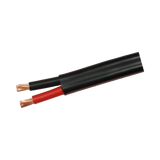
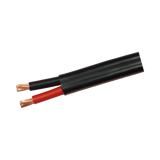
KEY 6 B&S (14mm2) Twin Core Battery Cable - 103A - Sold per 50cm

Regular price $800

  • 12 Month Warranty

Fast dispatch

Easy returns

  • 12 Month Warranty

Fast dispatch

Easy returns

Rated to 103A

Versatile 6 gauge twin core

High quality oxygen free copper


  • Visa
  • Mastercard
  • PayPal
  • Apple Pay
  • Google Pay
  • Shop Pay
  • Afterpay
  • Zip

KEY 6 B&S (14mm2) Twin Core Battery Cable - 103A - Sold per 50cm

Overview

Product Information

Product Description

Tired of wrestling with two separate cables for one job? This KEY 6 gauge twin core cable tidies everything up. It bundles your positive and negative wires into a single tough sheath, making for a much cleaner and quicker installation.

It's Aussie made with quality oxygen free copper, giving you a solid connection for your lights, pumps, and other accessories. It's the smart way to get a professional finish without the hassle.

Important Ordering Information

  • Wire is sold in 50cm (500mm) lengths
  • For 1 metre of cable, please order the quantity of 2 units and it will be one complete length

Disclaimers

All product information and images are sourced from manufacturer descriptions and may be updated by the manufacturer without notice to us.

Key Features

  • Rated to 103A
  • Versatile 6 gauge twin core
  • High quality oxygen free copper
  • Solid current conductivity
  • Tough outer sheath
  • Trusted Australian manufacturer

Pack Contents

  • 1 x 50cm (500mm) Length of 6 gauge twin core battery cable - (Priced Per 50cm)

Product Weight & Dimensions

  • 0.16kg
  • 500mm (L) x 16mm (W) x 8mm (H)

Specifications

KEY 6 B&S (14mm2) Twin Core Battery Cable - 103A - Sold per 50cm
Vendor KEY

FAQs

Frequently Asked Questions

Why is 100% copper cable safer than Copper-Clad Aluminium (CCA) for batteries?

Pure copper cable is safer because it offers significantly lower electrical resistance and higher conductivity than copper clad aluminium. This allows the wire to carry heavy current loads without generating dangerous levels of heat. CCA cable is often brittle and more prone to corrosion, which can lead to high resistance points and potential electrical failures in a high vibration vehicle environment.

Using 100 percent copper makes certain your appliances get the power they need while protecting your setup from overheating. This is a vital choice for high draw components that pull large amounts of current. Explore our range of Inverters to see how quality cabling supports heavy loads, or check out our Circuit Breakers & Fuses for added system protection.

AWG vs B&S vs mm²: How do you read 12V battery cable sizes?

B and S and AWG represent the same measuring standard where a smaller number indicates a thicker cable. The mm² measurement refers to the actual cross sectional area of the copper conductor, which is the most accurate way to compare different cables for their current carrying capacity.

Reading these sizes correctly is vital for choosing a cable that matches your specific accessory load. A 6 B and S cable is roughly equivalent to 13.5mm² and is a common choice for dual battery links. Selecting the right terminals is the next step for a tidy build. Browse our Crimping Tools to find hardware that matches your chosen cable size.

What size battery cable do I need for a 2000W inverter?

A 2000W inverter requires a heavy gauge cable such as 0 B and S or 00 B and S for short runs under one and a half metres. At full load, these appliances pull around 170 to 200 amps from your battery bank, which can damage thinner automotive wire.

Using heavy duty copper cable reduces resistance and prevents the voltage drop that often causes an inverter to shut down. Always keep these runs as short as possible to maintain charging efficiency and safety. Match your wiring to a high performance unit in our 12V Pure Sinewave Inverters collection.

How do I calculate voltage drop for 12V battery cables?

Calculate voltage drop by multiplying the total current in amps by the total round trip length of the cable in metres, then dividing by the cross sectional area of the copper. A healthy 12 volt system should aim for a voltage drop of less than 3 percent for general accessories and under 1 percent for critical charging circuits.

Excessive drop leads to poor appliance performance and slower battery recovery times. If your calculations show a high loss, the most practical solution is to increase the thickness of the cable or reduce the distance between the power source and the load. This keeps your system running at peak performance.